
Myopia - what is it actually?
We treat myopia at our vision school. But what does that actually mean? How exactly does myopia manifest itself and what treatment options are there? We explain the details to you:
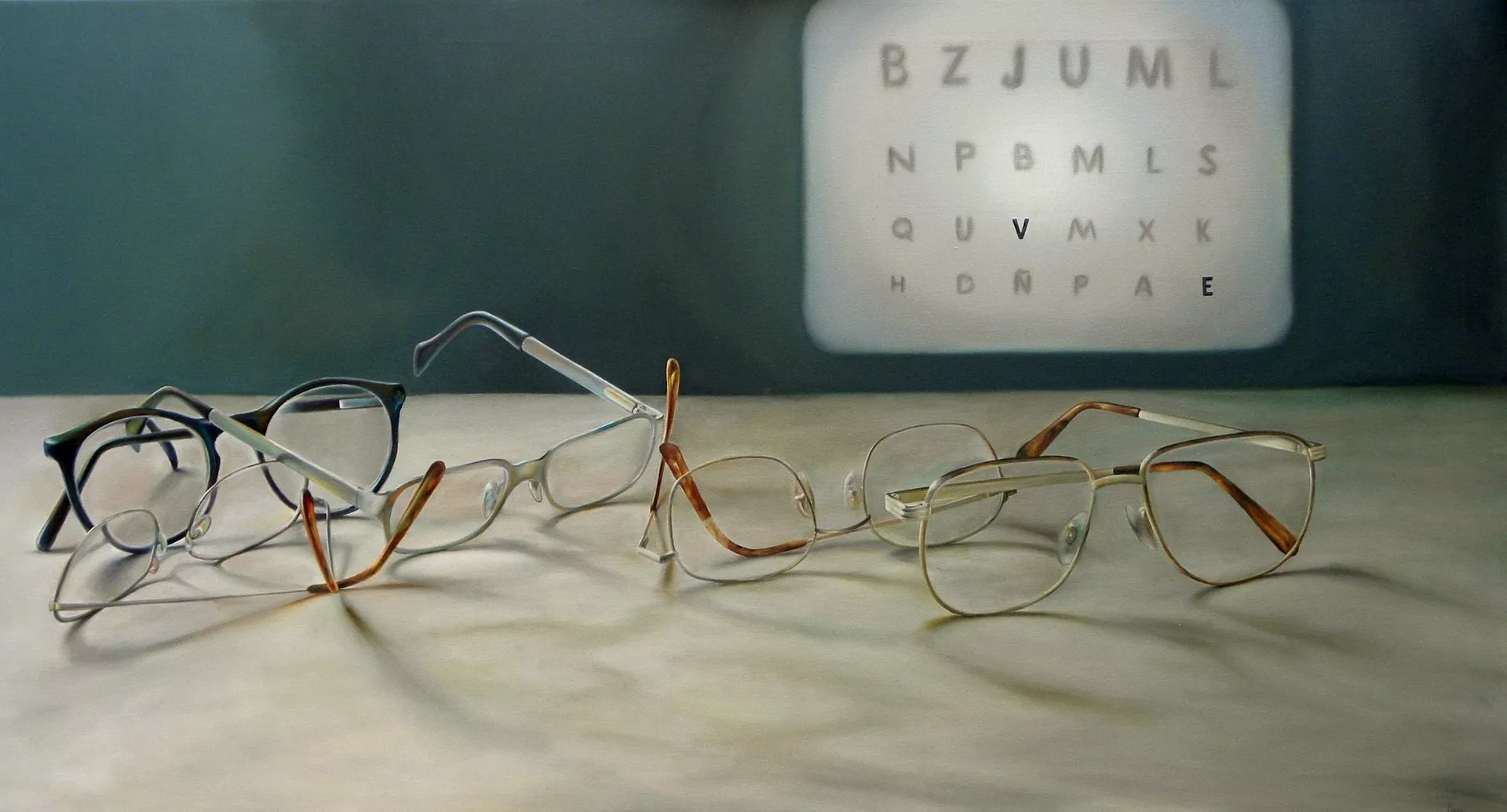
Myopia, better known as short-sightedness, describes a widespread functional impairment of the eye. Those affected can recognise their surroundings well at short distances, but objects in the distance only appear blurred and out of focus. Around 1.4 billion people worldwide are short-sighted.
The number of short-sighted people has risen significantly in recent years. A sharp increase can be seen in children and adolescents in particular. So-called school myopia is the most common form of short-sightedness and affects children between the ages of six and 15.
Forecasts predict that 50 per cent of people worldwide will be short-sighted by 2050. The reasons for this lie in the ever-increasing use of smartphones and computers.
What causes myopia?
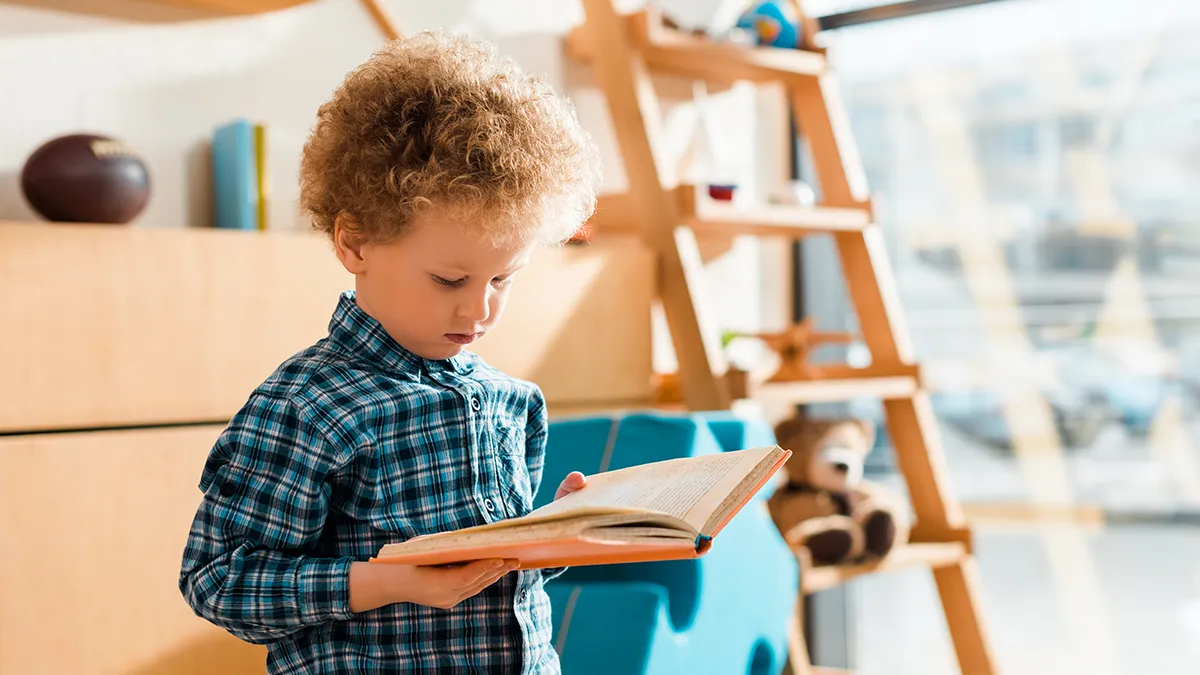
In a short-sighted eye, the incident rays of light are not refracted on the retina, but in front of it. This occurs because the myopic eyeball has an elongated shape. There are various causes for the lengthening of the eyeball. In addition to a hereditary component, it is above all our lifestyle that favours short-sightedness. Studies show that too many hours of close work (on a computer, tablet, smartphone or even reading books) promotes the lengthening of the eyeball. Whenever we read, play games or focus for long periods at close range, a device is very close and often directly in front of our eyes for hours on end. The monotonous, long periods of looking at short distances damages our eyesight and promotes short-sightedness.
How can short-sightedness be prevented?
Myopia that has already developed cannot be reversed. However, the right spectacle lenses or contact lenses can compensate for it. Here at BeyondEye, we try to recognise the onset of myopia as early as possible and prevent its progression as far as possible through myopia screening. Myopia screening is therefore particularly important for children and adolescents. Thanks to the latest research findings, we are able to counteract this with a range of innovative treatment options.
High-tech for myopia prevention
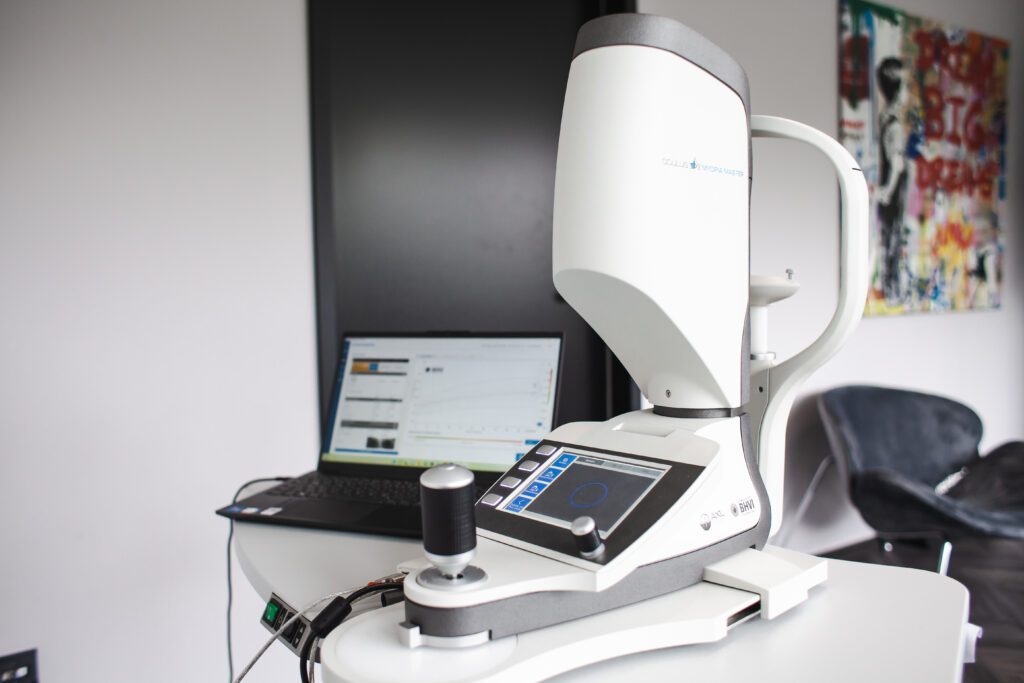
The Myopia Master is a diagnostic device specially customised for myopia prevention and control. By measuring the axial length, refraction and keratometry of the eye, the risk of myopia is reliably determined. By collecting this data, we at BeyondEye are able to recognise myopia even before it shows its first effects.
What can you do yourself to prevent short-sightedness?
The time spent in natural daylight plays a particularly important role for children. Sunlight releases the substance dopamine in the body, which inhibits the length growth of the eye. Children should therefore spend at least two hours a day outside in natural light.
Another factor is the ever-increasing amount of near work - even at a young age. Due to digitalisation and the associated increased use of smartphones, children today perform significantly more close-up work with their eyes than ever before. Constantly focussing on short distances promotes the lengthening of the eyeball, which leads to an increase in myopia, as described above. A reading distance of at least 30 centimetres should therefore be maintained wherever possible. To relax the eyes, it is also advisable to take frequent breaks and look into the distance.
What treatment options are there for myopia?
Here at the BeyondEye practice, you can expect a modern range of treatments for short-sightedness based on the latest scientific findings. Prevention and treatment can consist of the following components:
We use atropine therapy specifically for children with short-sightedness. A small dose of atropine is administered directly into the eye once a day before going to bed. The atropine is intended to prevent the eye from growing further in length. The eye drops consist of natural ingredients such as belladonna, with which many good experiences have already been made in ophthalmology. Experience has also shown that there are very few side effects. Studies show that atropine therapy can reduce the progression of myopia by around 50 per cent. This type of therapy is suitable for children between the ages of six and 14 who suffer from increasing short-sightedness - especially if the parents are already short-sighted or there is a high incidence of myopia in the family.
Ortho-K contact lens therapy involves fitting special contact lenses that are only worn at night. This method is suitable for both children and adults. The fitted lenses minimally deform the cornea overnight and thus ensure that visual impressions reach the correct part of the retina. Studies show that treatment with Ortho-K lenses can reduce the progression of myopia by around 50 per cent. Ortho-K lenses can be fitted from the age of six and cost around 45 euros per month.
In therapy with soft multifocal lenses, a second image plane is created in the eye using a special soft contact lens, which ensures the correct positioning of the image impressions on the retina. Multifocal contact lenses are worn during the day (for a maximum of eight hours) to reduce the progression of myopia by around 30 per cent. This has also been proven by studies. These lenses can be fitted from the age of six and cost around 40 euros per month.
This type of treatment combines the two therapeutic approaches described above. The Ortho-K lenses, which are worn exclusively at night, minimise the deformation of the cornea. The additional therapy with atropine simultaneously inhibits eye growth. According to current research, a combination of these two therapies is suitable for slowing down the progression of myopia in children. The cost of the combination therapy is around 60-80 euros per month.
For this type of therapy, we fit special lenses developed specifically for the prevention of myopia in children. These innovative lenses avoid an image behind the retina and the focal lines in the eye are shifted forwards thanks to a special design of the lens surface. The lens technology and costs vary depending on the manufacturer. This type of therapy is particularly suitable for younger children, as no lenses need to be fitted. We at BeyondEye will be happy to advise you in order to find the best possible customised treatment for you or your child.
Do you suspect that you suffer from myopia or recognise myopia in your child? Then simply make an appointment with us online now .
BVA and DOG recommendations for the prevention of myopia

Currently, around 15 per cent of all children in Germany are short-sighted at the end of primary school. Later in life, the figures increase dramatically: Almost half (45 per cent) of 25-year-olds are already affected by myopia. Reducing the progression of myopia in childhood is therefore particularly important. The professional ophthalmological association BVA (Berufsverband der Augenärzte Deutschlands e.V.) and the German Ophthalmological Society (Deutsche Ophthalmologische Gesellschaft) comment on this. The most important findings are summarised for you here:
Harmful behaviour (long hours in front of a mobile phone or computer) has a greater impact than genetic factors (hereditary short-sightedness). This was the result of large-scale studies involving numerous test subjects.
If one parent is short-sighted, the proportion of children also affected by myopia rises to 30 per cent. If both parents are short-sighted, the probability of the child suffering from myopia is around 60 per cent.
Exposure to light (daylight) can presumably prevent short-sightedness via the dopamine released. Studies show that just two hours of exposure to daylight halves the risk. Accordingly, children should plan extensive outdoor activities every day. The effect occurs not only on sunny days, but also when the sky is overcast. The proportion of UV radiation does not appear to be significant.
During the hours that young people usually spend working at close range, i.e. reading small print at a short distance, it is important to take breaks and change the direction of gaze after 30 minutes at the latest and look into the distance or into the greenery if possible. It is also helpful to change the distance from time to time.
The effect of low-dose atropine in reducing myopia progression has been known for 100 years, but the mechanism of action has not yet been fully clarified. Large-scale studies show that atropine dripped into the eye every evening at a concentration of 0.01 per cent significantly reduced the progression of myopia in the 6 to 14 age group. Approximately 10 per cent of the children did not respond.
The use of special multifocal contact lenses as an optical correction can also influence the progression of myopia. The success rate here is a reduction of around 22 to 30 per cent.
Special multifocal lenses can also reduce short-sightedness by compensating for long-sightedness in the periphery of the retina.