

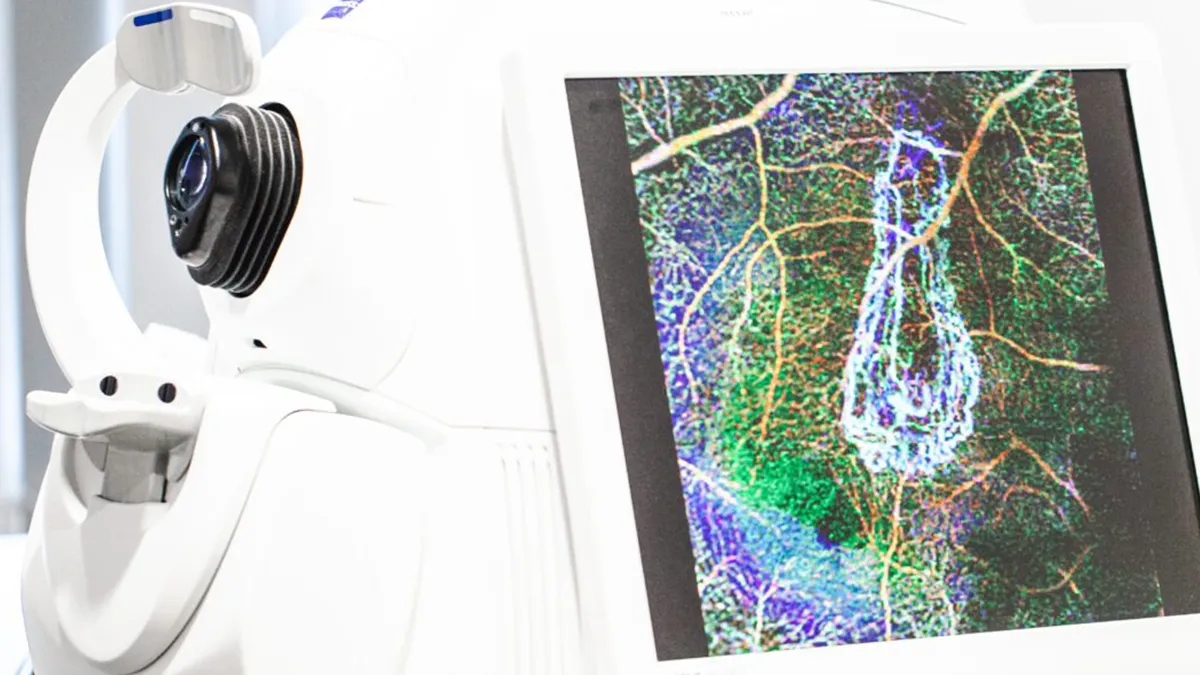
OCT of the optic disc
Optical coherence tomography (OCT) of the optic disc is a laser-based examination of the optic nerve head. Using this examination, we can precisely measure the optic nerve and the surrounding nerve fibres of the retina (retinal nerve fibre layer, RNFL for short). If this examination is carried out regularly, a so-called progression assessment can follow.
What does the analysis show?
The values of each individual measurement are compared with values from a standardised database. This allows us to create an individual risk analysis and determine whether glaucoma is present. In addition, a measurement of a specific layer of the macula, the ganglion cell thickness, can be measured using optical coherence tomography. This is of great importance when it comes to recognising and monitoring the progression of early glaucoma damage.
OCT angiography of the optic disc
OCT angiography is a special examination. It allows the vessels of the optic nerve head and the vascular density of the surrounding retinal nerve fibre layer to be visualised. In contrast to vascular imaging of the fundus of the eye using fluorescein angiography, this examination is performed without administering a dye.
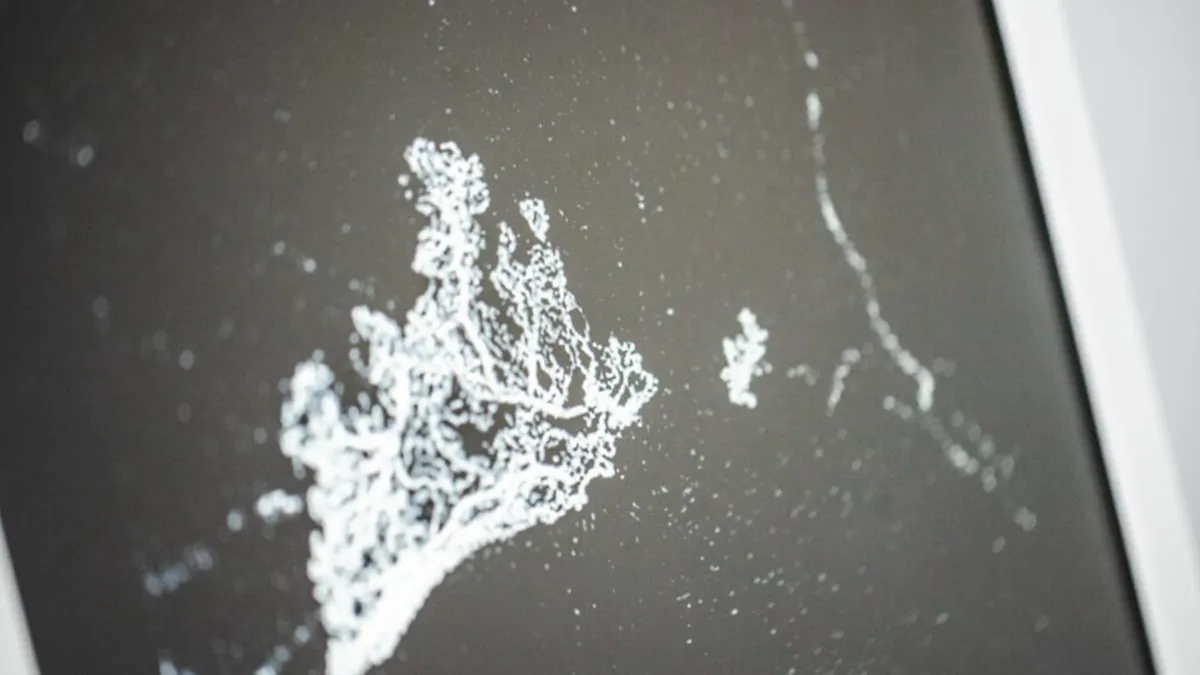
What does OCT angiography show?
The OCT angiography measurements allow us to make statements about the blood flow to your optic nerve head and your inner retinal layers. In particular, the comparison of several images over time allows us to assess the stability of the findings.