

What is a retinal laser?
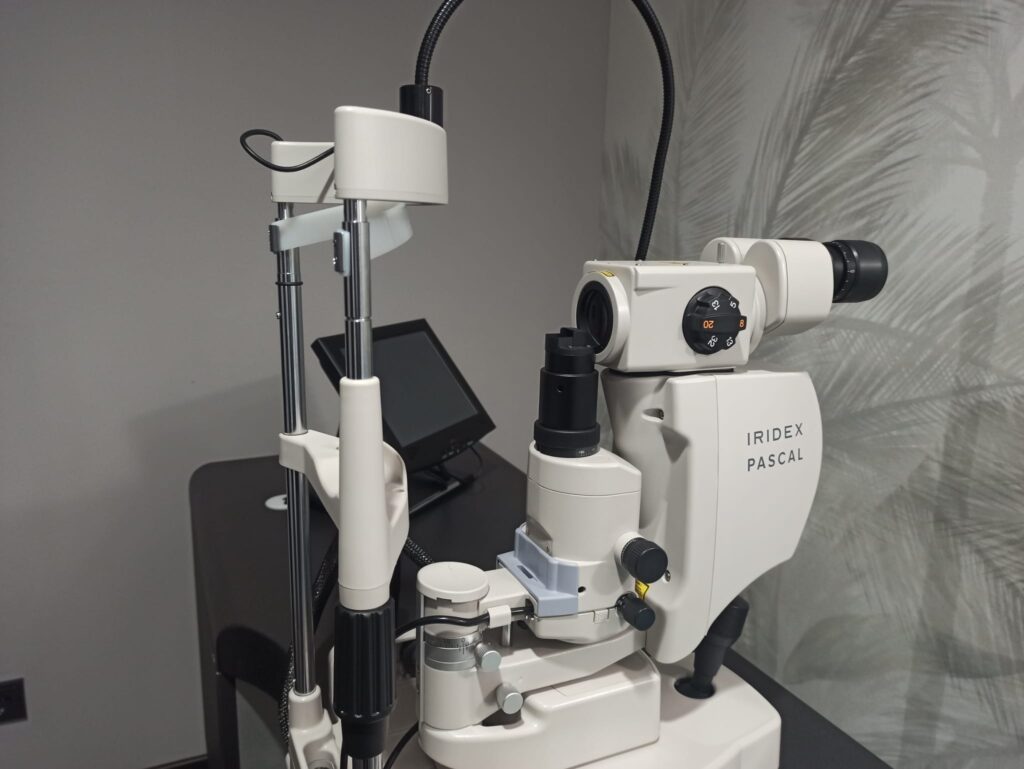
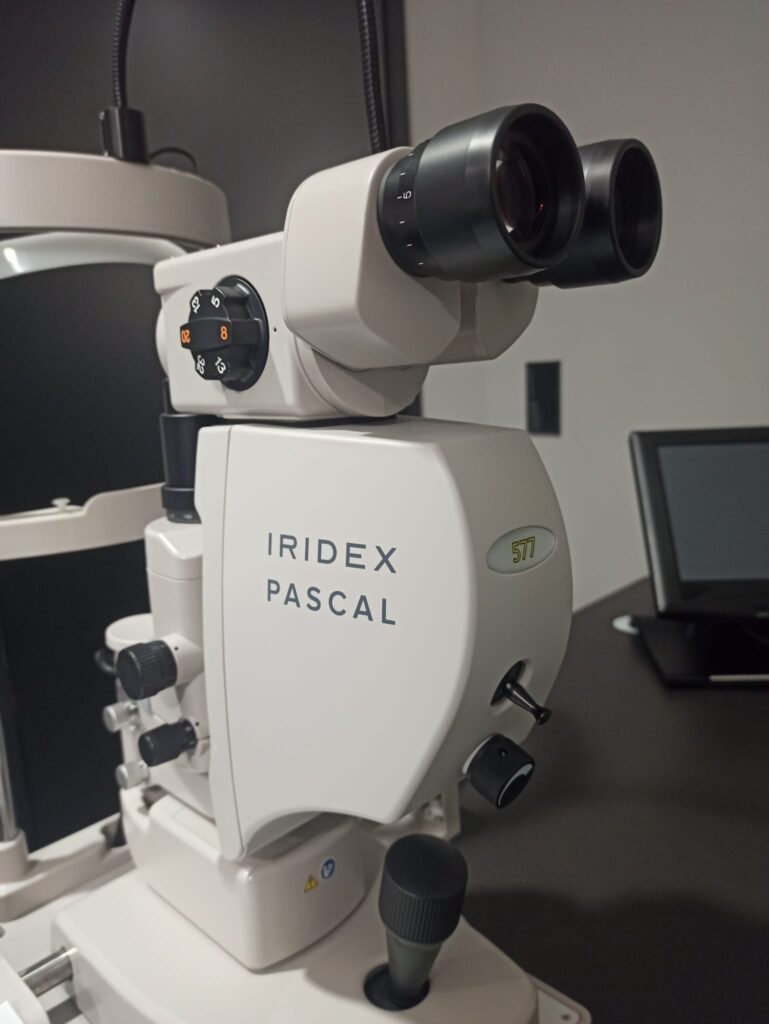
A retinal laser is a special laser - in our case a state-of-the-art PASCAL laser - used to treat various diseases of the back of the eye.
It can be used, for example, to treat retinal holes, areas of the retina that are not supplied with blood following vascular occlusion or advanced diabetic changes. The PASCAL laser offers us the possibility of minimising pain and minimising the impact of treatment with only a few necessary appointments. We can precisely adjust the intensity and number of laser foci required and customise them to your individual findings.
The technology behind it
The laser technique is based on the effect of photocoagulation. The absorption of the light generated by the retinal laser causes a tiny localised increase in temperature in the target tissue. This causes the diseased tissue to die. In the case of retinal holes, individual small dots are created around the defect with the laser. These function like small „welding spots". The thermal effect of the laser creates mini-scars around the hole and stabilises the retina at the edges around the defect. This prevents the retinal defect from tearing any further.
How does treatment with the retinal laser work?
Before a retinal laser, we anaesthetise your eye locally and dilate the pupil with eye drops. We then position a contact lens on the surface of your eye. The laser treatment then takes place. Retinal laser treatment is performed on an outpatient basis and usually takes around 10 to 20 minutes. Several appointments are often necessary for the treatment of diabetic retinal changes.
What needs to be considered after retinal laser treatment?
As your pupil needs to be dilated with eye drops for the laser treatment, you must not drive for around four hours after the treatment. Otherwise, you can go about your everyday life as normal.
Do you already know our Driving service? You are welcome to have us pick you up and bring you home again.
What are the after-effects or risks of the retinal laser?
The eye may be reddened or irritated after retinal laser surgery. In this case, we will prescribe anti-inflammatory eye drops. In rare cases, clouding of the lens, an increase in intraocular pressure or the formation of epiretinal gliosis may occur after treatment. Good aftercare is therefore very important and is a top priority at BeyondEye.
Micropulse laser therapy
We use micropulse laser therapy to treat chronic retinopathia centralis serosa. This disease leads to fluid deposits under the retina and pathological changes in the retinal pigment epithelium.
Micropulse laser therapy consists of extremely short laser pulses (a few nanoseconds long) that follow each other with short interruptions. In this way, we achieve that the effect of the laser occurs almost exclusively at the level of the retinal pigment epithelium. The remaining retinal layers are spared as much as possible. Laser therapy achieves a reduction in inflammatory processes and the formation of damaging fluid accumulations. The existing fluid can then be gradually broken down by the healthy cells of the ocular fundus.