

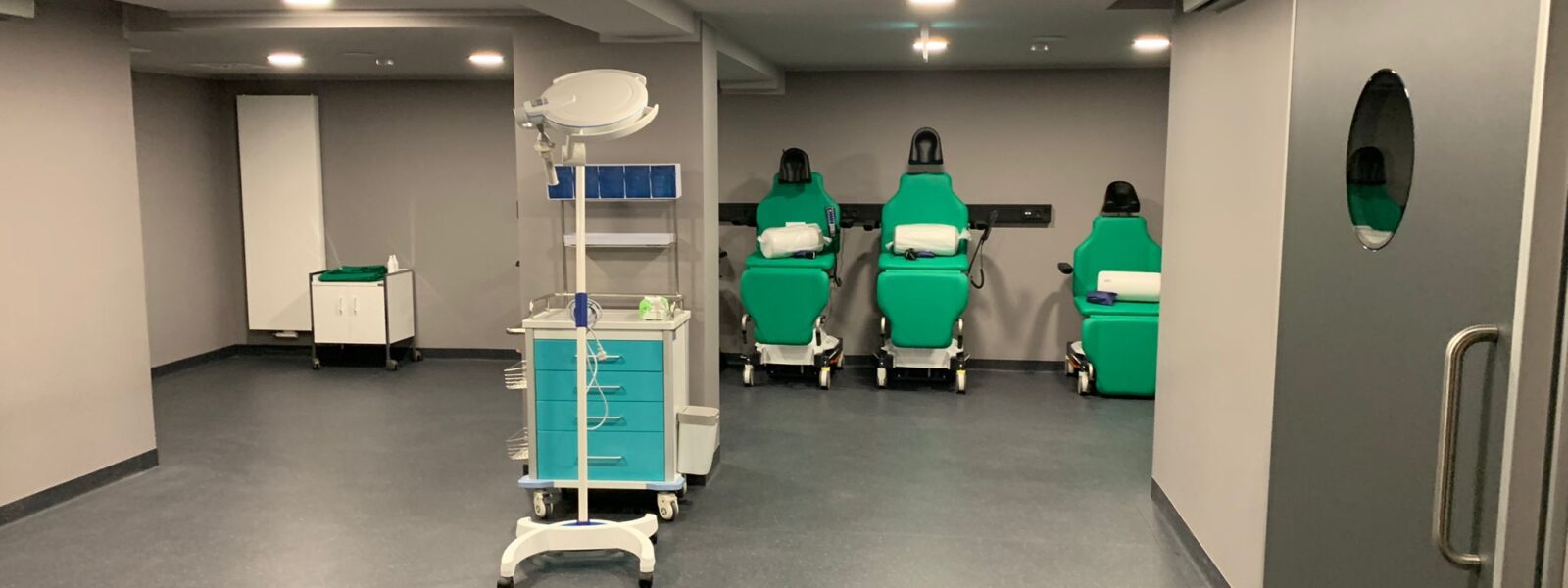
IVOM - this abbreviation stands for Intravitreal Operative Medication. The IVOM injection is therefore used when we administer certain medications. Under local anaesthetic, a cannula is inserted into the vitreous body of the eye in a minimally invasive procedure - i.e. with the least possible effort and a very small puncture. We can then administer the medication through the cannula. In the case of chronic diseases, an implant can also be inserted into the eye, which continuously releases the medication.
An IVOM injection is administered on an outpatient basis in our practice. To avoid infections, this is of course done under sterile conditions. Before the injection, the entire eye area is disinfected to prevent inflammation.
The detailed procedure of IVOM treatment
The treatment is mostly used for so-called wet macular degeneration. Other possible applications include diabetic macular oedema, vein occlusion and myopic choroidal neovascularisation (CVN). IVOM treatment is also used in the development of CNV as part of CCS (choriorethinopatia centralis serosa). The disease is chronic and usually requires long-term treatment - often for years.
In the first three months of treatment, one IVOM injection is given every month, while we continuously monitor the progress of the disease very thoroughly. If further IVOM injections are then necessary, a further treatment plan is drawn up and the injections are administered at the individually required intervals. A minimum interval of four weeks between treatments is mandatory.
Before IVOM treatment - what you should bear in mind
Please wear comfortable clothing and no make-up for the treatment. After a brief preliminary examination and hygienic preparation for the operation, anaesthetic eye drops will be instilled into your eye. This prepares the eye well for the IVOM injection, which is usually virtually painless. You will then be given an eye dressing.
What to do after the operation
As the IVOM injection is an outpatient treatment, you can be taken home after the procedure accompanied by another person. We ask you not to drive alone and to ask someone to pick you up. The eye bandage can be removed after about three hours. Patients report that they sometimes have slightly blurred vision at first. This is normal and nothing to worry about. It may take a few hours before you can see clearly again. There is virtually no pain after the IVOM injection. If you do experience pain, please contact us.
Aftercare
We will see you again in our practice for a follow-up examination approximately three days after the procedure. We will clarify what is important for your individual course of the disease, such as eye drops and other medication, in an individual consultation. Further follow-up checks are usually advisable around four weeks after the last IVOM injection. The findings are analysed using OCT, whereby the condition of the macula is thoroughly checked. We pay particular attention to whether the findings are dry or whether fluid deposits are still present. If the latter is the case, IVOM therapy should be continued.
At BeyondEye, we are of course always available to answer your questions about macular diseases. Feel free to contact us if you would like more information on IVOM treatment for the various macular diseases.