

Cataracts - what are they?
A Cataracts, Cataract, also known by the technical term cataract, is a clouding of the lens of the eye. It is a widespread eye condition. As the disease progresses, the lens becomes increasingly inflexible and opaque. This reduces visual acuity and those affected report a kind of fog or veil in front of their eyes.
Cataract surgery is the most frequently performed operation on the human eye in Germany. With over 750,000 operations per year, it is even one of the most frequently performed operations overall. The good news is that almost 90 per cent of people who have cataract surgery are largely successful in restoring or even improving their original vision. At BeyondEye, we have made the diagnosis and treatment of cataracts a focus of treatment in our practice.
When should a cataract be operated on?
The best time for cataract surgery depends on various factors. The extent to which you feel restricted in your everyday life by the deterioration in vision plays a major role. The clouding of the lens can cause vision to deteriorate dramatically and make certain activities, such as driving, impossible. If a cataract is at an advanced stage, vision can deteriorate so dramatically that there is a risk of blindness in the affected eye. In such a case, surgery should be performed as soon as possible, as the prospects of improvement clearly outweigh the risks of the procedure.
Would you like to make an appointment for a cataract examination or ask questions? Then Simply arrange your desired appointment online for an eye check.
Which lenses are used for cataracts?
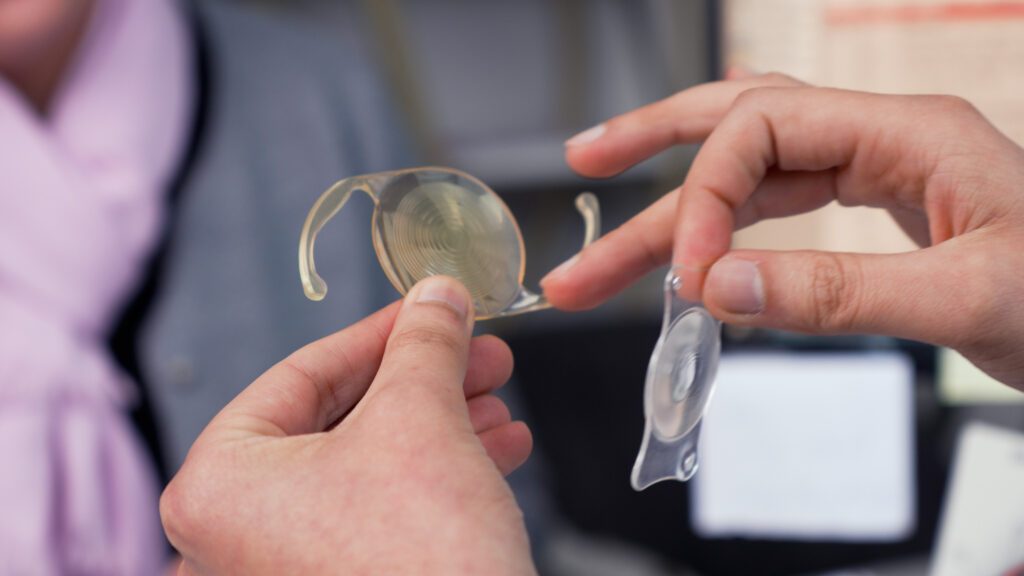
In the treatment of cataracts, an artificial lens is inserted in place of the original eye lens. The new artificial lens can be calculated for a specific distance (distance or near) so that the patient then only needs reading or distance glasses. We will decide together with you which correction option makes the most sense after a detailed consultation.
The artificial lenses are usually made of acrylic material, which is very flexible. Thanks to this flexibility, they can be folded and inserted into the eye through a tiny opening, where they unfold. Multifocal artificial lenses are also used if required. They not only correct presbyopia, but also take into account short-sightedness or long-sightedness as well as astigmatism. If the lens is optimally adapted, you can even manage without varifocals or reading glasses.
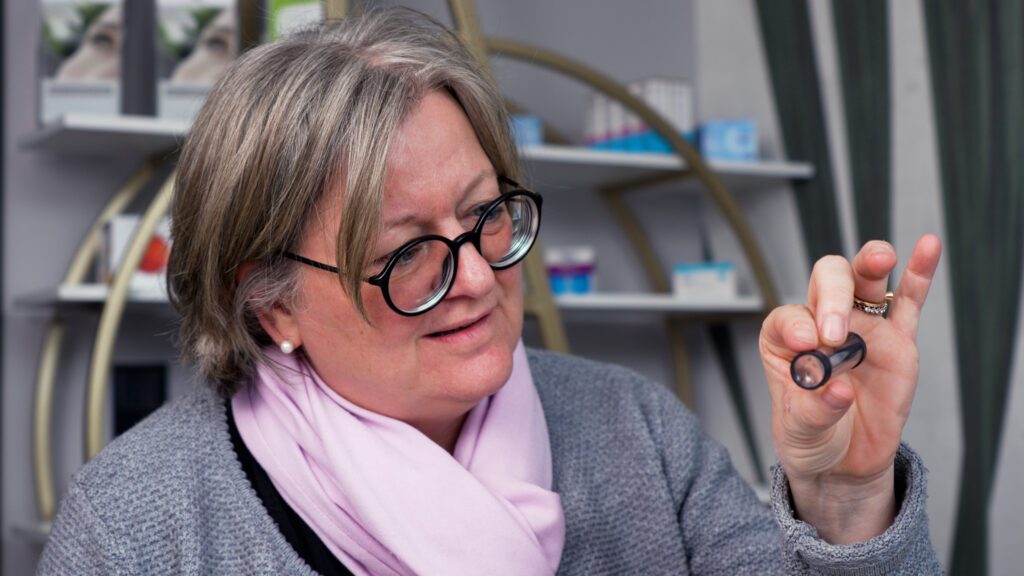
All lenses that are inserted during cataract surgery are generally well tolerated and remain in the eye permanently. Incidentally, they are not visible there.
If you would like to know more about the treatment or the special lenses, we will be happy to advise you. Please contact us on 0221/871050.
What is important to prepare for the operation?
In the run-up to the operation, we will ask you for all the necessary information. We will also take some measurements that are necessary for an optimal result after the operation. This is important to ensure that the selected artificial lens fits perfectly. Following the preliminary examination, you will meet the anaesthetist in a personal consultation. This will cover the various anaesthetic options. You can choose between partial anaesthesia, general anaesthesia or local anaesthesia using eye drops.
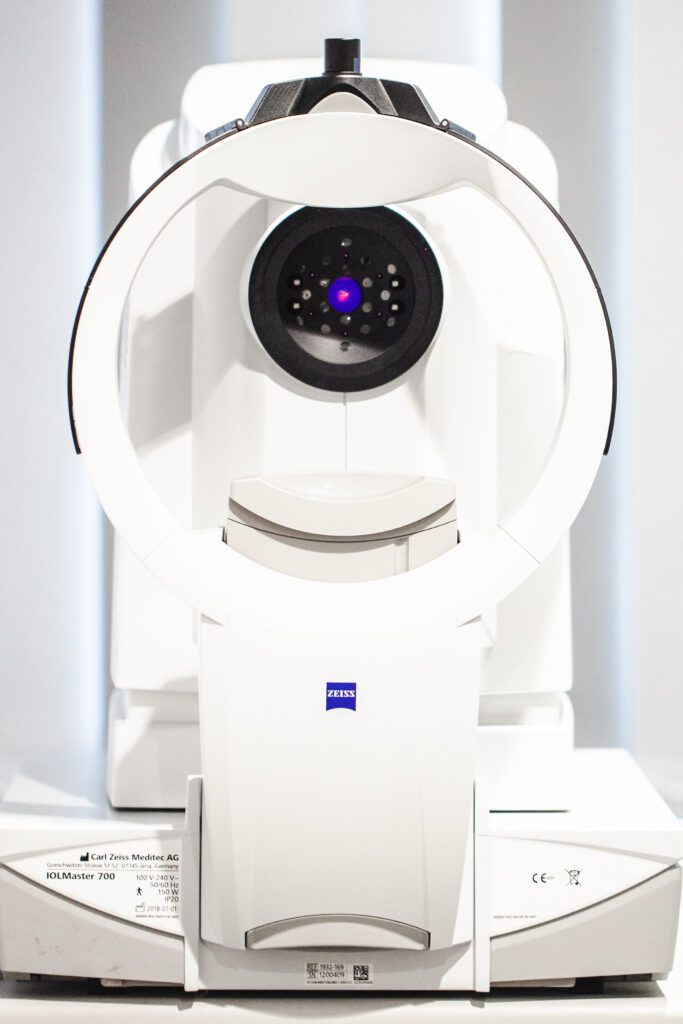
Our IOL Master for the examination of cataracts
How is a cataract operated on?
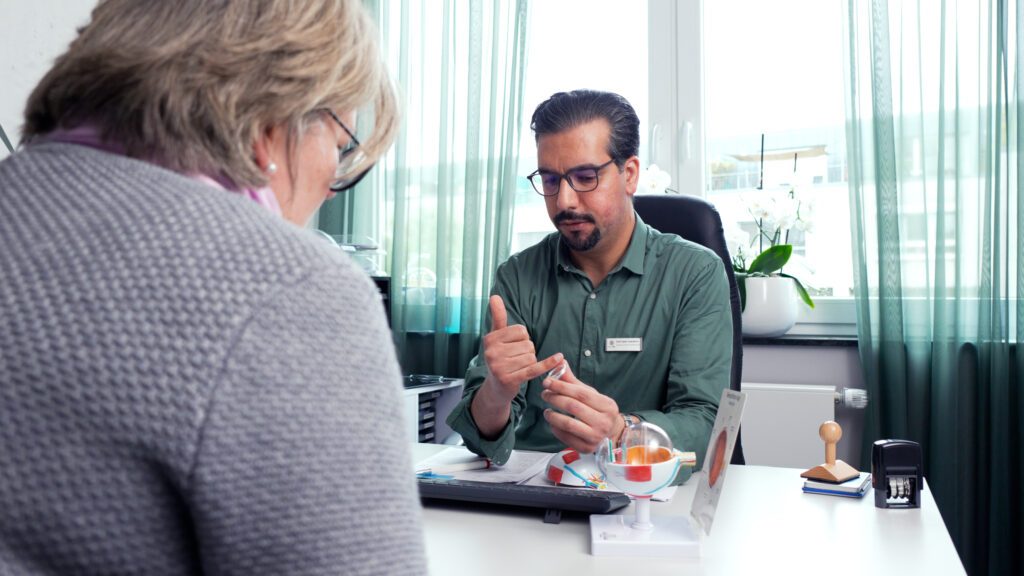
Patients often ask us what the procedure for cataract surgery looks like. Once the anaesthetic you have chosen has been administered, the so-called eyelid spreader is inserted. This keeps the eye open during the operation. A minimal, previously calculated incision is then made at the outer edge of the eye. Through this small opening in the cornea, we reach the lens capsule, the natural covering of the lens. The front of the lens capsule is then opened. An ultrasound cannula (phacoemulsification) specially developed for ophthalmology is then used to carefully break up the old, cloudy lens. This residue is then completely suctioned out. As soon as the capsular bag is clean, we insert the pre-selected artificial lens.
What needs to be considered after cataract surgery?
Immediately after the operation, your eye will be covered with an ointment dressing. For your own safety, you will remain with us for a few minutes for observation. If there are no complications, you will then be able to return home. Please note: It is not possible to drive home in your own car on the day of the operation. You should therefore make arrangements in advance for someone to drive you home.
If nobody can drive you, we cordially invite you to use our in-house Driving service to use.
In the first few weeks after the operation, you should also avoid strenuous activity, sport and working overhead. When performing personal hygiene, make sure that no soap-containing products get into the operated eye. In the first four weeks after the operation, regular follow-up checks in our practice are also important so that we can monitor your successful recovery.
„I had confidence straight away."
What are the risks of cataract surgery?
Around 97 per cent of cataract operations in Germany are free of complications. Nevertheless, this operation - like all surgical procedures on the eye - also involves risks. For example, if the lens shell is torn during this operation, the natural lens can fall into the vitreous body. This can be corrected by another operation. In very rare cases, blindness can occur as a result of a bacterial infection. Bleeding in the eye cannot be completely ruled out either. Thanks to our many years of experience and state-of-the-art technology, you can feel safe in our practice and in the hands of our team.
Treatment of an afterstar
Thanks to careful execution and good aftercare, we keep a close eye on the progress of cataract operations. Nevertheless, a so-called „secondary cataract" can occur (in approx. 20 to 30 per cent of operated patients). In this condition, the remnants of the remaining lens capsule become cloudy. In most cases, this clouding can be treated with laser treatment. In very rare cases, a second surgical procedure is necessary. Experience has shown that secondary cataracts tend to occur in younger patients.
Do you still have questions about cataracts? Our practice team will be happy to help you on 0221/871050.
Always in the best hands
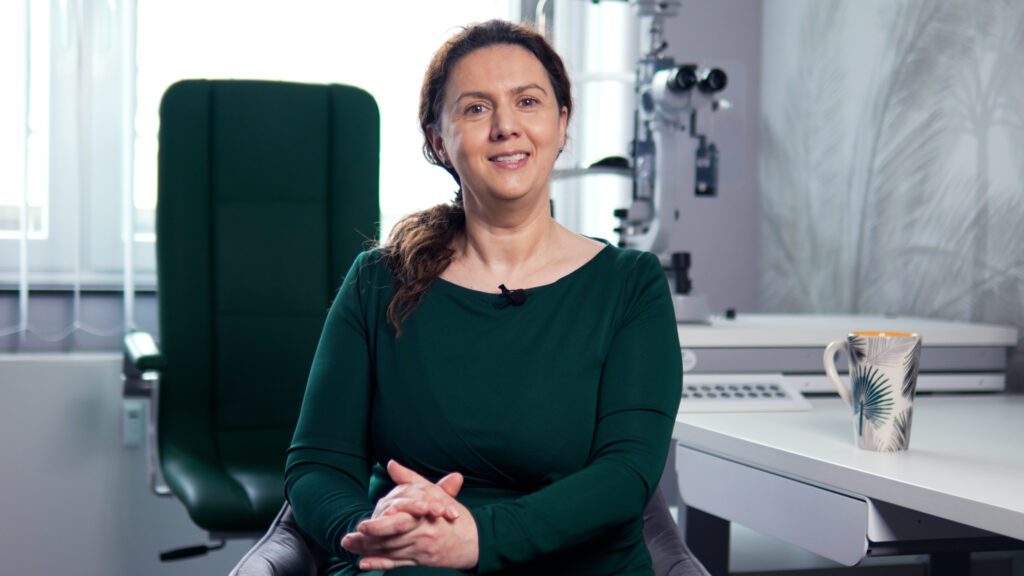
At BeyondEye, you are always in the best hands - especially when it comes to cataracts. Practice founder Doctor-medic Roxana Fulga has specialised in this field, among others. Under the guidance of Prof Dr Kaymak, an absolute pioneer in his field, she has made cataract surgery her hobbyhorse.